In Plain View Public Spaces But Private Rules
In public spaces you can photograph anything in plain view, until you can't.
It goes like this.
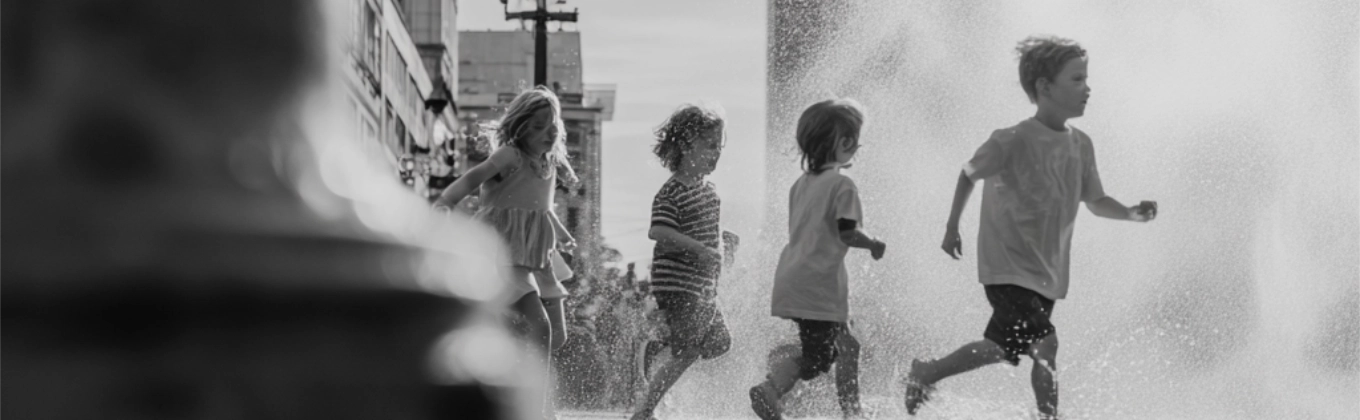
You are working a downtown plaza; the kind of place you would call public without thinking about it. Open to the sidewalk, a few trees, tables anyone can sit at, a fountain running through the afternoon. Ten minutes in, a camera on your strap, and a security guard walks over to tell you that you cannot do that here.
You ask what he means. He points at the camera. Not here. You gesture at the people around you holding up phones, photographing the same fountain, the same light. He shrugs. Phones are fine. The camera is not.
You ask who you can talk to about the rule. He gives you a number for building management. You call it across the week. No one answers, no one calls back. The rule has no author you can reach. It has only an enforcer, and the enforcer has already gone back to his post.
You are in an open San Francisco plaza, but you could be in almost any city in the country, because the ground under your feet is not the public space it appears to be.
The bargain that changed it all
A privately owned public space is exactly what the name says, once you slow down and read it. It is open to the public and owned by a private party, and the two halves sit together less comfortably than the plaza makes it look. Cities built these spaces through a trade. A developer wanted a tower taller or denser than the zoning allowed. The city granted the extra height in exchange for open space at street level, kept available to the public. The developer got the floors. The public got the plaza.
The trade began in New York in 1961 and spread from there. New York now has hundreds of these spaces. Los Angeles and Seattle run the same bargain under the same plain name. Walk through any major downtown area and you are moving in and out of them without noticing, which is the point. They are designed to read as ordinary public ground.
San Francisco gives the clearest look at how the deal gets marked. The program runs back to the 1985 Downtown Plan and is governed by a section of the Planning Code, and the city does not leave the signage to chance. It prescribes the plaque that announces each space, down to its size and its wording: a standardized sign that reads Public Open Space, with the hours the public is welcome and the amenities the owner agreed to provide. The same authority that compelled the space into being also standardizes the sign that names it public.
Then, set onto the pavement of some of these same plazas, there is a second marker, smaller and easy to miss, that says the right to pass is subject to the control of the owner. That sentence is the whole arrangement in miniature. The space is public in use and private in control. You are welcome until you are not, and the call about which one you are belongs to someone who does not have to explain it.
The law mostly agrees with the owner. The standard the civil liberties groups give is clean enough to fit on a card. In a public space where you are lawfully present, you can photograph anything in plain view. On private property, the owner sets the rules about photography and can ask you to leave if you do not follow them. A privately owned public space is built to sit on the wrong side of that line for a photographer, no matter how public it feels underfoot. Some states complicate this. California, under the Pruneyard doctrine, has treated certain privately owned spaces open to the public as something closer to a public forum. But that is a thin and contested thread to hang a working photographer's footing on, and the guard is not waiting on a court ruling.
The Tell
The rule is not a ban on photography. The camera phones tell you that. Everyone around you is making pictures and no one else is stopped. The rule is narrower and stranger. It is a ban on photography that looks like it means business, and the thing that makes you look that way is the camera.
There is a reasonable case for this, and it deserves to be taken seriously before it is taken apart. The argument will tell you the camera rule is about liability. A real camera, the argument goes on, suggests a commercial shoot. A commercial shoot brings a tripod that blocks the walkway, lights, a crew, models, permits and insurance the building never agreed to host. The phone is a tourist. The camera is a production. Stopping the camera is the building protecting itself from a use it never signed up for.
Grant all of it. Then watch the rule meet the people it catches. It stops the retiree who bought a good camera to learn the city through it. It stops the street photographer carrying a single body and a single lens, no tripod, no crew, nothing commercial anywhere on him. Both are doing what the people with phones are doing, with no more footprint and no more intent, and both get waved off while the phones stay.
Now turn it around. A few feet from where you are stopped, an Internet influencer plants a phone on a pocket tripod, clip on a ring light, and film themselves for a brand, an actual sponsored shoot running in the open, and walk through untouched. The phone clears them. The equipment that reads as harmless does the exact thing the rule claims to worry about, while the equipment that reads as a threat is usually doing the least.
So, the rule does not track commercial use, and it does not track intent. It tracks the look of the tool. A guard with no written policy to consult, no author to call, and a plaza to keep orderly reaches for the fastest signal available. That signal is the size of the thing in your hands. A rule that stops the harmless and clears the commercial is not a standard. It is a reflex, and the reflex lands on whoever looks most like they came to make something serious.
What leaves quietly
For documentary work, a chain of custody is worth a great deal. A news photograph carries a contract with the viewer: this happened, this is how it looked, you may rely on it. A record that shows a file came straight from a sensor, unaltered, serves that contract directly. Provenance belongs in the newsroom, the archive, and the marketplace, where the real question is where a file came from and whether it can be trusted as a source.
It would be easy to file this under nuisance, one more small friction in a city full of them. It is more than that because of what street photography is and where it must happen.
The work rests on two things. The photographer must be present in shared space, and the photographer must be free to record what happens there. For most of the medium's history those two conditions arrived together at no cost, because the shared space was public in fact and the right to photograph in it was settled. The candid encounter with the world, the unplanned meeting of strangers and light and architecture that the genre exists to catch, was there for the taking wherever people gathered.
People still gather. They gather in these plazas, in the atriums and the through-block passages and the ground-floor commons that developers put up in trade for their towers. Public life has moved, in good part, into spaces that are public in use and private in control. The right to photograph there did not move with it. It narrows space by space, with no law passed and no debate held, one guard's judgment at a time.
Think about what that record looks like when someone is allowed to make it. A man asleep across three chairs in a granite atrium at lunch hour, the towers reflected in the glass above him. Two strangers sharing a bench and a long silence. The particular way a crowd folds through a through-block passage at five o'clock, all of it lit by borrowed light off the buildings. These are not pictures you can plan or stage. They happen once, in front of whoever is standing there ready, and the places where they now happen are the places where the camera gets stopped at the door.
The loss is quiet, which is what makes it hard to name. Nothing is banned. The plazas stay open. You can sit, eat, meet a friend, and hold up your phone. What gets withdrawn is narrower and harder to watch go: the freedom to photograph these places with intent, to treat them as a subject worth looking at hard rather than a backdrop for a selfie. That freedom leaves without a sound, and it leaves first for the people whose equipment says out loud that they meant to use it.
The photograph the guard stops and the photographs the phones are free to take are of the same photograph. Same fountain, same light, same plaza. He is not protecting anything in the frame, because the frame is already being made a dozen times around him. He is sorting by how serious the photographer looks, and the camera answers for you before you can.
None of this was decided
No council voted to thin out the right to photograph the city, and no court drew the line where the guard draws it. It happened the way these things happen now, by default, through a hundred small enforcements that each look like nothing on their own.
A camera is the most honest tool you can carry into a public space. It says plainly what a phone keeps quiet: that you came here to look, and to keep what you saw. That honesty is what gets you stopped. These spaces are built where the surest way to lose the right to photograph the shared world is to look like you take it seriously.
Resources & Further Reading
Privately-Owned Public Open Space and Public Art | San Francisco Planning Department
Zoning Administrator Bulletin No. 8: Privately-Owned Public Open Spaces Informational Plaque | San Francisco Planning Department | December 2012
Privately Owned Public Spaces | New York City Department of City Planning
Privately Owned Public Spaces (POPS) | Los Angeles City Planning
Privately Owned Public Spaces | Seattle Department of Construction and Inspections
Photographers' Rights | American Civil Liberties Union
The Privatization of Public Space: Modeling and Measuring Publicness | Jeremy Németh and Stephen Schmidt | Environment and Planning B, 2011