Hard Light, Soft Glass Photographing Brutalism and Modernism as Fine Art
Brutalist and Modernist buildings get grouped together constantly. Both styles are severe, beloved and despised in roughly equal measure. But point a camera at them and resemblance falls apart immediately.
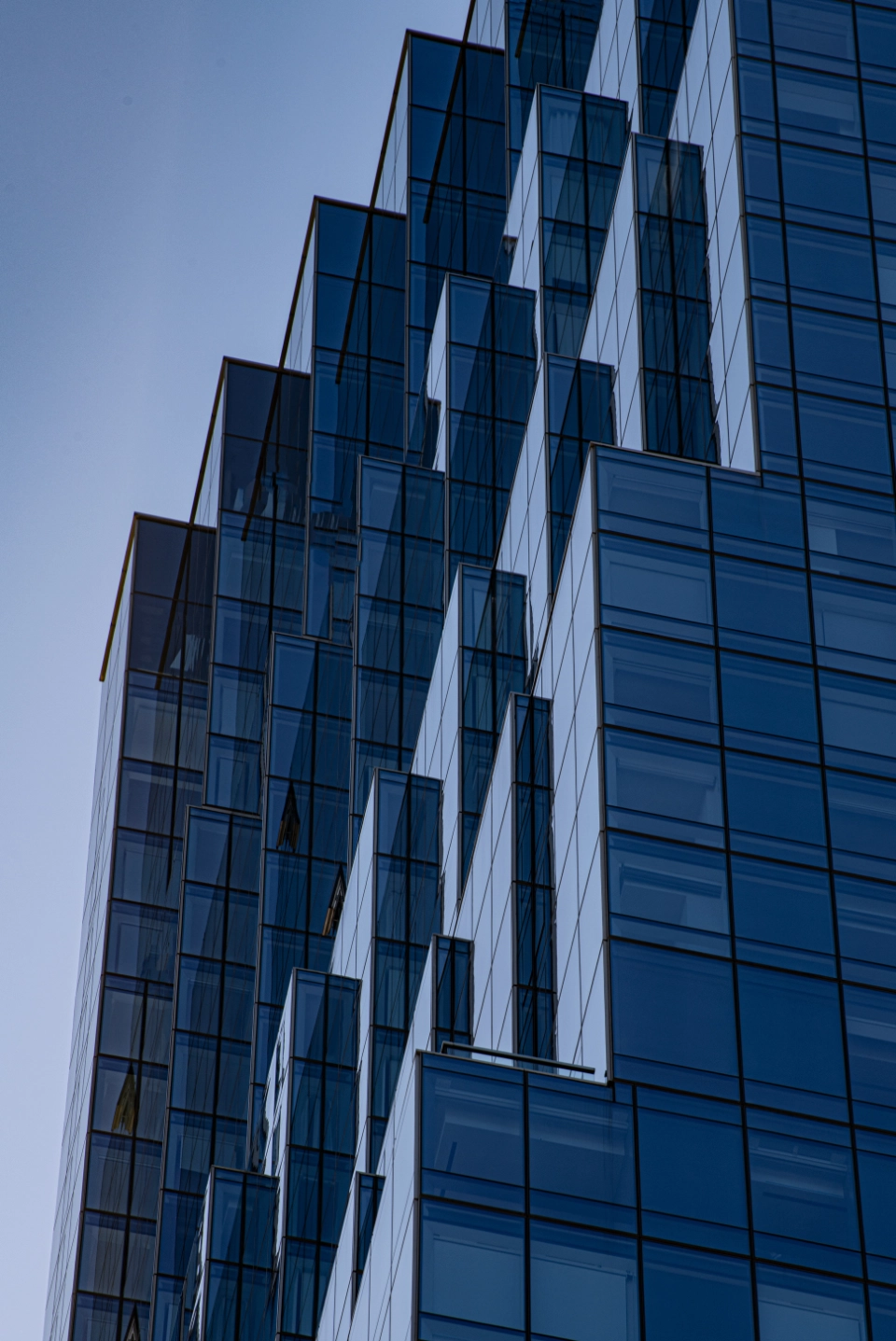
Two architectural traditions have two completely different photographic problems. Why treating them the same way is where most architectural shoots quietly go wrong.
Brutalist and Modernist buildings get grouped together constantly. Both products of the 20th century, both severe, both beloved and despised in roughly equal measure. But point a camera at them and the resemblance falls apart immediately. One is about mass. The other is about surface. One rewards hard light and deep shadow. The other will punish you for arriving at the wrong time of day and leaving before the glass has had a chance to do something interesting.
Treating them as the same photographic problem is where most architectural shoots quietly go wrong.
This isn’t primarily a stylistic observation. It’s a technical one. The material logic of each tradition is different enough that the questions you need to answer before raising the camera — about light, focal length, exposure strategy, and what you’re actually trying to make — are almost entirely distinct. Getting clear on those differences is what moves architectural photography from record-keeping into something closer to fine art.
Concrete rewards hard light
The defining material of Brutalism is béton brut: raw, exposed concrete, often board-formed, often textured, frequently stained by decades of weather and atmospheric indignity. Concrete behaves in ways that glass does not. It holds texture. It catches shadow. It carves.
Which makes the single most counterintuitive thing about photographing Brutalist architecture this: harsh light is your friend.
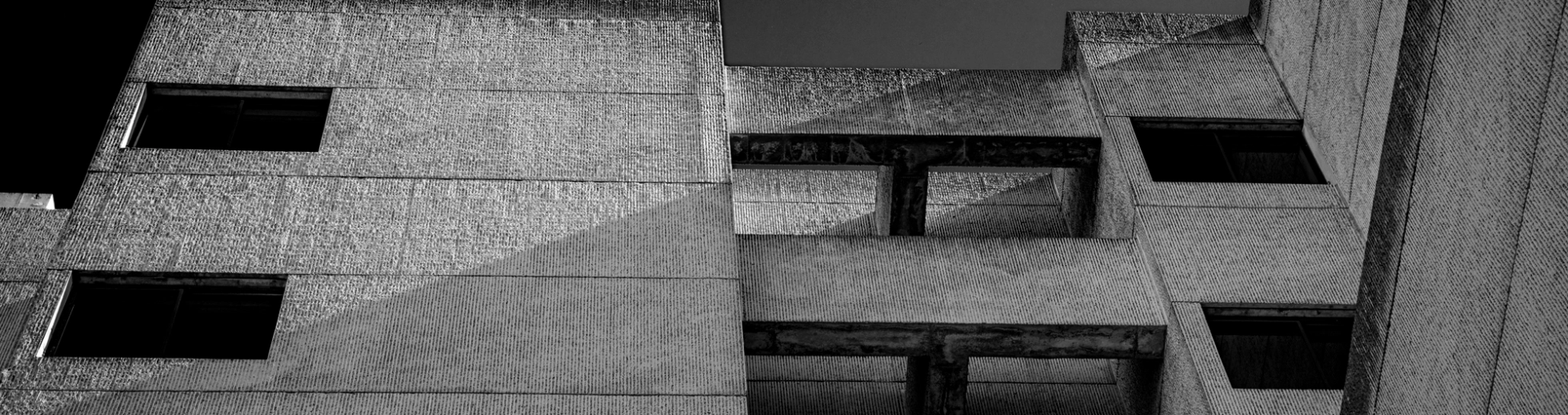
Most photography advice tells you to avoid midday sun. For Brutalism, late-morning or late-afternoon raking light is frequently the best light available. That hard, directional source catches the pores and grain in formed concrete, drives shadow into deep recesses, and turns the angular geometry of stacked volumes into something that reads almost sculpturally. The rough surface that looks flat and gray on an overcast day suddenly has dimension and weight.
Overcast days have their own utility, but for a different problem. When you’re working on very dark, stained, or weathered concrete, diffuse light gives you a fighting chance of holding detail across a wide tonal range without blowing highlights or losing shadow structure in the deep recesses. The choice isn’t between good and bad light. It’s about which problem you’re solving on a given day.
Exposure strategy follows directly from this. In full sun, concrete can specularly reflect and clip quickly, so the discipline is to expose for the highlights while recovering shadow in post. Bracketing two to three frames gives you insurance when shadow recesses are genuinely deep. In post, a channel-based monochrome conversion — rather than a flat desaturation — lets you control concrete, sky, and any incidental vegetation separately. That granular control matters significantly in how the final print reads, particularly at large scale.
Black and white is worth committing to early for Brutalist work. Removing color foregrounds geometry and surface in ways that a color file often can’t, and the tonal relationships that define a Brutalist building — the contrast between sunlit concrete and shadow-filled voids, the texture gradient across a board-formed wall — translate into monochrome with a clarity they rarely have in color.
The case for the longer lens
Brutalist buildings frequently occupy tight urban sites, which forces wide angles you might not otherwise choose. Working at 17 to 24mm full-frame equivalent gets you the full building in frame, but creates distortions that can make heavy forms look unintentionally unstable rather than deliberately monumental. A tilt-shift lens, where available, lets you keep the camera level while shifting upward to include the top of the structure, preserving parallel verticals without introducing the converging lines that suggest the building is falling backward. Without movements, keeping the camera level and correcting in post is workable — with the accepted tradeoff of a modest crop.
For fine art work, though, the more interesting lens choice is frequently the longer end of the range. A focal length between 50mm and 135mm compresses the modular repetition that most Brutalist buildings are built from — balconies, stair cores, window bays, repeated structural bays — into dense, almost non-representational patterns. At that focal length, you’re no longer photographing a building. You’re photographing its logic. The individual elements dissolve into rhythm and geometry, and what you have is something closer to an abstract print than an architectural document.
That shift is worth pursuing deliberately rather than arriving at by accident. The tight crop of a stair core, the compression of five floors of repeating balconies into a single graphic plane, the alignment of formwork marks into near-perfect rows: these are the images that live as fine art prints rather than reference photographs.
Glass is a different problem entirely
Where Brutalism confronts you with mass, Modernism presents surface. Glass curtain walls, thin slabs, expressed steel frames: the material language of Modernism is about lightness, transparency, and above all, reflection. And reflection is the central technical challenge.
The key insight professional glass photographers return to again and again is that camera position controls everything. Small changes in angle — a step left, a slight change in elevation — radically reorganize what is being reflected in the facade. This is why working on a tripod and moving slowly is not just about sharpness. You’re auditioning what the glass wants to show you. Walk a semi-circle around a glass facade while watching the viewfinder and you’ll see the reflected city rearrange itself completely within a few meters of lateral travel.
To reduce reflections and reveal interior detail, move closer to the surface and angle the camera more perpendicular to it. The reflected environment shrinks. The interior becomes visible. To exploit reflections for layered images — city stacked on sky stacked on the glass plane itself — step back and shoot obliquely. Both are valid choices. Neither is accidental.
The dynamic range challenge with Modernist subjects is persistent. Glass and sky can be significantly brighter than interior structure, particularly in the afternoon. Graduated ND filters, exposure bracketing, or both give you the material to work with in post without being forced to choose between a blown-out sky and a blocked-up facade.
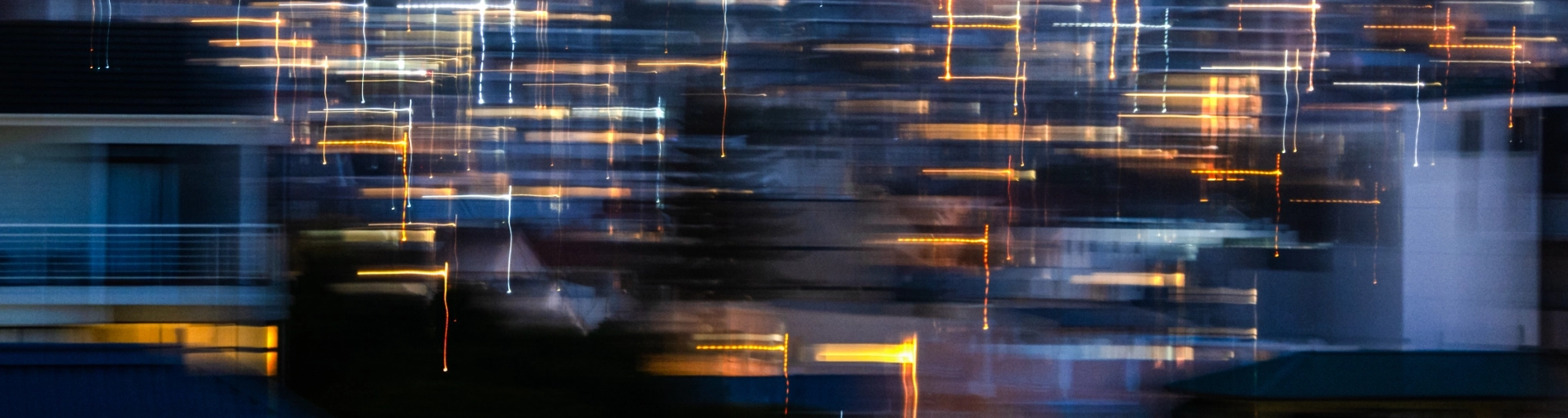
Blue hour — that narrow window when interior and exterior brightness begin to equalize — is often the most technically forgiving time to photograph glass-heavy buildings, and frequently the most visually rewarding. As daylight drops and interior light holds, the building becomes something like a lantern. Reflections become softer and more selective. The facade reads differently than at any other time of day, and the window is short enough that you need to have your composition and exposure strategy ready well before it opens.
Position controls everything
A circular polarizer is useful for glass but imperfect. On modern facades with multiple panes and varying coatings, polarization works unevenly, and maximizing it often produces more problems than it solves: one section darkens while another is untouched, and the facade starts to look inconsistent in ways that are difficult to address cleanly in post. The better discipline is to rotate the polarizer to taste rather than to maximum effect. Find the balance of transparency and reflection that serves the image, then account for the one to two stop light loss in your exposure settings.
Compositionally, Modernist architecture is already designed. The grid is already there. The rhythm of mullions, floor lines, and structural bays is resolved by the architect long before you arrive. Your task as photographer is to amplify that design language rather than compete with it. Meticulous alignment of key verticals and horizontals with the sensor — using live-view grids and magnification — is not pedantry in this context. On a gridded facade, small deviations are obvious. This is the architectural tradition that most rewards precision and punishes approximation.
Longer focal lengths do specific work for Modernist subjects. In the 45mm to 90mm range, a facade becomes a composition of planes rather than a building in space. Multiple reflection layers stack into a dense, almost two-dimensional image that bears a closer relationship to a painting than to architectural documentation. That compression, managed carefully, is where the fine art potential of glass-heavy architecture tends to live.
Working a site before you photograph it
Regardless of which architectural tradition you’re working with, the discipline that makes the biggest difference is the one that happens before you raise the camera: the survey pass.
Walking a site without gear — just observing how light moves across the structure at different times, noting where key shadows fall, identifying which angles reveal the building’s structural logic — gives you information that no amount of online research substitutes for. It changes what you decide to come back for, and when.
After the survey, a lens-and-position test session lets you identify which compressions or expansions best express the building’s character. Wide angles give you massing and context. Normal focal lengths give you something closer to the human experience of the space. Longer lenses compress and abstract. Each tells a different story about the same structure, and the right choice depends entirely on what you’re trying to make — which you can only know once you’ve seen the building respond to actual light.
The rest of the technical workflow is largely consistent across both building types: work from a tripod once you’ve found your primary views, bracket for safety, and resist calling it done too early. For concrete, stay through the shadow migration as the sun moves. For glass, stay for blue hour.
From shots to a series
The difference between a set of technically accomplished images and a coherent fine art series is intentionality about scope, visual language, and sequence.
For Brutalist work, a series organized around one visual motif — corners, stair cores, the relationship of formwork marks to geometry, the pattern of repeating window bays — gives you a framework that transforms individual images into a conversation with each other. A consistent decision about monochrome versus color, and about aspect ratio, enforces the visual grammar across images made at different sites and different times. Consistency of approach is what allows a viewer to understand that they’re looking at a series rather than a collection of individually strong pictures.
For Modernist work, the organizing principle might be reflection behavior — how different glass buildings catch the same city differently — or the relationship between interior light and exterior surface across blue hour at a sequence of structures. The subject becomes the glass’s relationship to time and context, not any individual building.
Sequencing shapes how a series reads. Moving from very abstract fragments to more legible architectural views creates one kind of rhythm. The reverse creates another. Letting visual rhymes recur — a repeated angle type, a consistent shadow quality, a similar tonal register — creates coherence without monotony.
What makes this kind of project worth pursuing as fine art rather than documentation is that the camera is doing something the building doesn’t do on its own. Brutalist concrete that reads as merely heavy in person can become something close to sublime in a well-made print. The glass facade that seems like a problem to solve on site becomes, under the right conditions, a record of time and light that the architect never quite intended.
That gap — between what the building is and what the photograph makes of it — is where the work lives. Getting the technical decisions right is what keeps the gap open long enough to find something worth making.
Resources
Technique-oriented
Architectural Photography: Tips for capturing the soul of a structure
— Vistek / Pro Photo Blog, June 27, 2025
How to shoot architectural photography that reveals a city’s unique and changing identity
— Kim Bunermann, Digital Camera World, August 14, 2025
Why you should photograph “ugly” buildings
— Jon Stapley, WEX Photo Video, March 2, 2022
How to Photograph Glass: Tips to Improve Your Glass Photography
— Garry Belinsky, Adorama, November 8, 2022
Controlling Reflections in Glass
— Peter Molick, April 27, 2020
Using reflections in your architectural photography
— Lauri Novak, August 25, 2023
Veiled in Brilliance: How Reflective Facades Have Changed Modern Architecture
— Thomas Schielke, ArchDaily, October 12, 2016
Photographer references
Levi Wells
— Hotel Casa TO, Punta Zicatela (Brutalist-influenced)
Martin Vorel
— Black and white Brutalist architectural prints, Centrotex Building, Prague
Angie McMonigal
— A Look at Brutalism fine art series
Paul Clemence
— Modernist series including Palm Springs and CERN Science Gateway
Iwan Baan
— Modern and Brutalist buildings in social context
Japanese Architecture Offices Through the Lens of Marc Goodwin
— Maria-Cristina Florian, ArchDaily, May 3, 2024
Centro de Arte Moderna Gulbenkian
— ArchDaily, February 27, 2026