Lessons From Real-World Controversies The Ethics of Street Photography II
The author and editors work primarily in fine art photography in the U.S. This perspective is shaped by that context.
This article is for informational purposes only and does not constitute legal advice. For advice on your situation, consult a qualified attorney.
Street photography thrives on unplanned encounters and candid moments, but those same qualities raise tough questions about privacy, consent, power, and exploitation.
Rather than offering simple rules, these case studies show how “What can I legally do?” and “What should I morally do?” often point in different directions.
1. Philip‑Lorca diCorcia’s “Heads” and the Times Square Lawsuit
In the early 2000s, Philip‑Lorca diCorcia created his “Heads” series in Times Square, photographing passersby with a hidden strobe and later exhibiting and selling large prints as fine art. One subject, an Orthodox Jewish man named Erno Nussenzweig, sued the photographer and Pace/MacGill Gallery, arguing that using his image without consent violated New York privacy law and his religious prohibition on graven images.
A New York court dismissed the lawsuit, holding that the photo was protected artistic expression and that the claim was time‑barred under state law. Legally, the decision reinforced that photographers in New York can exhibit and sell street photographs of people in public without consent when the work is treated as art rather than advertising.
Ethically, however, the case exposed deeper tensions:
- The subject’s beliefs vs artistic freedom: Nussenzweig argued that being photographed and displayed violated his religious convictions, raising the question of how far photographers should go when their practice collides with someone’s faith.
- Profit and power: The gallery and artist profited and enhanced their reputations, while the subject had no control and no share in the outcome, highlighting a power imbalance common in street photography.
- Legal rights vs ethical responsibility: The court affirmed what diCorcia could do; the public debate focused on whether this was how a photographer should treat an unsuspecting stranger.
This case is a touchstone for discussions about whether fine‑art status justifies non‑consensual use of identifiable street portraits, especially when money changes hands.
2. Vivian Maier: Posthumous Fame and Unasked‑For Legacy
Vivian Maier, a Chicago nanny who photographed the streets obsessively throughout the mid‑20th century, became world‑famous only after her death, when her undeveloped rolls and negatives were discovered at auction and later exhibited, published, and sold. Her story raises two overlapping ethical questions: the treatment of the photographer and the treatment of her subjects.
On the photographer side, Maier left no clear instructions about what should happen to her archive. Curators, collectors, and publishers made the decisions that transformed her into a global art phenomenon. Some commentators have asked whether it is ethical to turn a private, possibly introverted artist into a brand without her explicit consent, and to monetize her work primarily for the benefit of others.
On the subject side, Maier’s photographs include countless people who never imagined they would become part of international books, exhibitions, and documentaries. Many were children at the time and may still be alive. Even if the images are legally protected as art and documentary, the scale and permanence of modern distribution—books, prints, social media—go far beyond the original moment in which the photos were taken.
The Maier case shows that ethical questions don’t stop with the person pressing the shutter. Archivists, rights holders, and curators also shape how street photographs enter the world and what obligations are owed to both creator and subject.
3. Bruce Gilden’s In‑Your‑Face Flash Photography
Bruce Gilden is a celebrated but polarizing figure in street photography, known for working extremely close to people—often just a step away—and firing a flash without warning to capture intense, confrontational expressions. His images have a distinctive look: dramatic light, exaggerated features, and candid reactions of surprise or discomfort.
Supporters argue that his method is part of a long tradition of raw, uncompromising street work and that the resulting pictures reveal psychological truths about urban life. Critics counter that intentionally startling strangers for the sake of an image approaches harassment and treats people’s discomfort as raw material.
Ethical issues raised here include:
- Dignity vs drama: Many of Gilden’s portraits emphasize asymmetries, wrinkles, and fleeting grimaces that some subjects might find unflattering or humiliating, inviting debate about whether the quest for visual impact justifies such treatment.
- Consent and confrontation: Even where the law allows candid photography, deliberately provoking a reaction blurs the line between observation and intrusion.
- Attitude toward subjects: Public comments about needing to have “thick skin” to handle his approach can sound dismissive of the emotional impact on people who never signed up to be part of an artwork.
This controversy is useful for exploring how far “fearless” street practice can go before it becomes ethically problematic, even if technically lawful.
4. Photographing Homelessness and Poverty as “Urban Grit”
Images of unhoused people and others experiencing visible hardship have become a common feature of street portfolios and social media feeds. In many cities, photographers have faced backlash for posting aestheticized black‑and‑white images of people begging, sleeping rough, or visibly distressed, sometimes accompanied by vague captions about “urban reality.”
Several ethical concerns recur in these disputes:
- Exploitation of vulnerability: Turning someone’s lowest moments into emotionally charged imagery can feel like mining suffering for content, especially when the photographer gains followers, portfolio pieces, or sales while the subject receives nothing.
- Stereotyping: A steady stream of images of homelessness and addiction can reduce a complex social issue to a visual cliché, reinforcing the idea that certain people or neighborhoods are defined solely by their hardship.
- Lack of context or help: Critics frequently point out that many such images are made and posted without attempts to speak with the subject, offer assistance, or support organizations addressing the underlying problems.
Some practitioners publicly commit to never photographing identifiable homeless individuals for personal projects, arguing that the street is effectively their home and deserves the same respect as a private interior. Others insist that documenting poverty is important but must be done with clear intent, consent where possible, and a strong sense of responsibility for how images will be read.
5. Social Media “Call‑Outs” and Viral Shaming
The rise of smartphones and social media has produced a new kind of street‑image controversy: photos or videos of strangers posted with captions that label them as “creeps,” “Karens,” or other stereotypes, often sparking mass online condemnation. Sometimes later reporting reveals that the original interpretation was incomplete or simply wrong.
In these cases, the image itself might be legally permissible, but the way it is framed and shared turns it into a powerful tool of public judgment. Ethical issues include:
- Trial by internet: People identified (or easily identifiable) in such posts can face professional, social, or mental‑health consequences without due process or the chance to correct the record.
- Caption as weapon: A neutral frame—someone standing on a train, looking in a direction—becomes accusatory once paired with a narrative of harassment or bigotry, even if no clear evidence is shown.
- Permanence and searchability: Once an image goes viral, it may be nearly impossible for the subject to remove, affecting their digital footprint indefinitely.
For ethical street practice, this phenomenon is a warning about how captions and context can transform a candid photo into a lasting harm, especially when shared to large audiences.
6. Children, Playgrounds, and Public Outrage
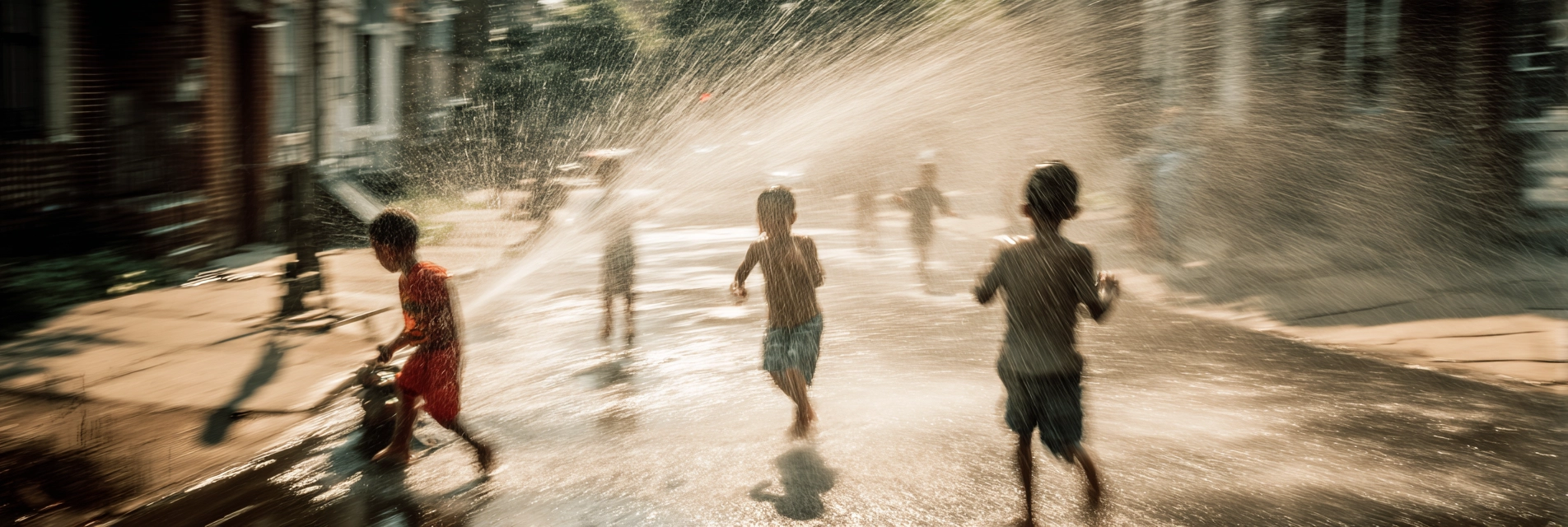
Photographers have repeatedly been confronted—or at times questioned by police—after photographing children in parks, playgrounds, or public events, even where local law permits photography in public spaces. Parents often react with fear or anger, worrying about potential misuse or online distribution.
These confrontations bring several tensions into focus:
- Social norms vs legal rights: While laws in places like the United States generally allow photographing children in public without consent, many parents and communities view it as unacceptable unless there is a clear reason, such as news coverage.
- Heightened sensitivity: In an era of widespread concern about child exploitation and doxxing, photographing minors carries a different emotional weight than photographing adults.
- Long‑term digital identity: Posting identifiable images of children contributes to a permanent online record that they did not choose and may later resent.
Many ethical guides recommend a stricter personal standard for photographing minors—seeking parental consent when feasible, avoiding close‑ups of faces for non‑news work, or choosing not to publish such images at all, even if making them is legal.
7. Telephoto Lenses and Peering Into Private Spaces
Another recurring controversy arises when photographers use long lenses to photograph people inside homes or apartments through windows or across courtyards, then present the work as commentary on isolation, surveillance, or modern life. Projects of this kind often provoke strong reactions from both the public and privacy advocates.
The ethical stakes are comparatively clear:
- Reasonable expectation of privacy: Even if a person is technically visible from a public vantage point, the interior of a home is widely understood—both legally and culturally—as a private space.
- Voyeurism vs documentation: Intentionally seeking out semi‑hidden personal moments blurs into voyeurism, especially when subjects are partially undressed, engaged in intimate behavior, or unaware of being observed.
- Emotional impact: Subjects who later discover they were photographed in their own homes often describe the experience as deeply violating, regardless of whether the project had “artistic” intentions.
These debates show that “if you can see it, you can shoot it” is an inadequate ethical standard, particularly when technology allows seeing much farther and more precisely than the human eye.
8. Pandemic‑Era Street Images and Public Shaming
During the COVID‑19 pandemic, photographers and everyday citizens documented mask‑wearing, protest gatherings, and rule‑breaking in public spaces. Many images were posted online with moralizing captions—shaming individuals for not distancing or celebrating them for defiance—turning street scenes into political ammunition.
Controversies here centered on:
- Privacy during crisis: People in vulnerable states—grieving, anxious, or ill—were photographed and sometimes widely shared without context, raising questions about heightened ethical obligations during emergencies.
- Scapegoating individuals: Focusing on single citizens in crowded environments sometimes shifted attention away from systemic issues and onto easy targets, amplifying social hostility.
- Rapid misinterpretation: Snapshots taken at one moment (for example, people close together who had just arrived from the same household) were often interpreted as clear evidence of wrongdoing.
These disputes underline how quickly street images can be pulled into political battles, placing extra weight on the photographer’s choices about framing, caption, and distribution.
9. AI, Facial Recognition, and the Afterlife of Street Photos
In recent years, investigative reporting and technical research have shown that publicly available photographs—including candid street images—are sometimes scraped at scale to train facial‑recognition systems and other AI models. People who appear incidentally in these images rarely know or consent to this secondary use.
Ethical concerns include:
- Loss of anonymity: A candid photo of someone walking down a street can now become part of a dataset that enables them to be identified in other contexts, including in surveillance footage.
- Context collapse: Photographers may have intended their work as art or documentary, but mass scraping turns individual images into data points detached from original meaning.
- Collective impact: Even if each individual image is legally taken, the aggregate effect—supporting biometric tracking or intrusive analytics—raises questions that go beyond any single photographer or subject.
This emerging reality forces street photographers to think not just about immediate publication but also about how their work might be repurposed, intentionally or not, in the future.
10. What These Cases Teach About Ethical Street Practice
Across these controversies, several themes repeat:
- Law is the minimum: Courts often side with photographers, especially when work is framed as art or editorial content, but ethical debates continue regardless of legal outcomes.
- Consent is nuanced: Subjects, photographers, and even downstream users of images (curators, platforms, AI developers) all contribute to the ethical picture, and consent can be absent or ambiguous at each stage.
- Power and vulnerability matter: Many disputes involve vulnerable people—religious minorities, unhoused individuals, children, or ordinary citizens thrust into viral fame—being depicted by more powerful institutions or creators.
- Context changes everything: Captions, platforms, political climates, and new technologies can turn a seemingly harmless frame into something harmful or weaponized.
For anyone serious about street photography, these case studies are not arguments to stop shooting. They are invitations to develop a personal code of ethics that treats human dignity as a creative constraint, not a creative obstacle.
Conclusion: Ethics as a Creative Constraint
Ethics, when embraced, is not a barrier to great street photography; it is a creative constraint that can push you toward more thoughtful, layered work. Instead of chasing the most shocking or invasive image, you learn to look for scenes that reveal truth without trampling on dignity.
The camera gives you power; your ethical choices determine how you use it. In the age of pervasive surveillance and fragile trust, choosing to practice street photography with consent, empathy, and self‑restraint is itself a radical artistic act.
Resources & Further Reading
The Law and Ethics of Street Photography
— Do Street Photography
Is Street Photography Ethical?
— Keith Dotson, Shadows and Light
Street Photography Ethics — PHOTO 101
— Penn State
Nussenzweig v. DiCorcia
— Wikipedia
Battle Over ‘Heads’ Photo Goes to Court
— The New York Times
IMPACT | Philip‑Lorca diCorcia: Head On
— Musée Magazine
Controversial Photos — Ethics Case Studies
— The Media School, Indiana University
What Are Some of the Ethical Questions Raised by Street Photography?
— MediaFactory
Street Photography: Ethics, Consent, Privacy, and New Technologies
— Bartosz Koszowski
Doing Street Photography in 2024: The Age of Privacy Concerns
— Thierry Jose — September 26, 2024