Brutal Aesthetics or Just Broken Politics
From post-war idealism to stigmatized projects, what the dismissal of Brutalism reveals about how we confuse aesthetics with politics.
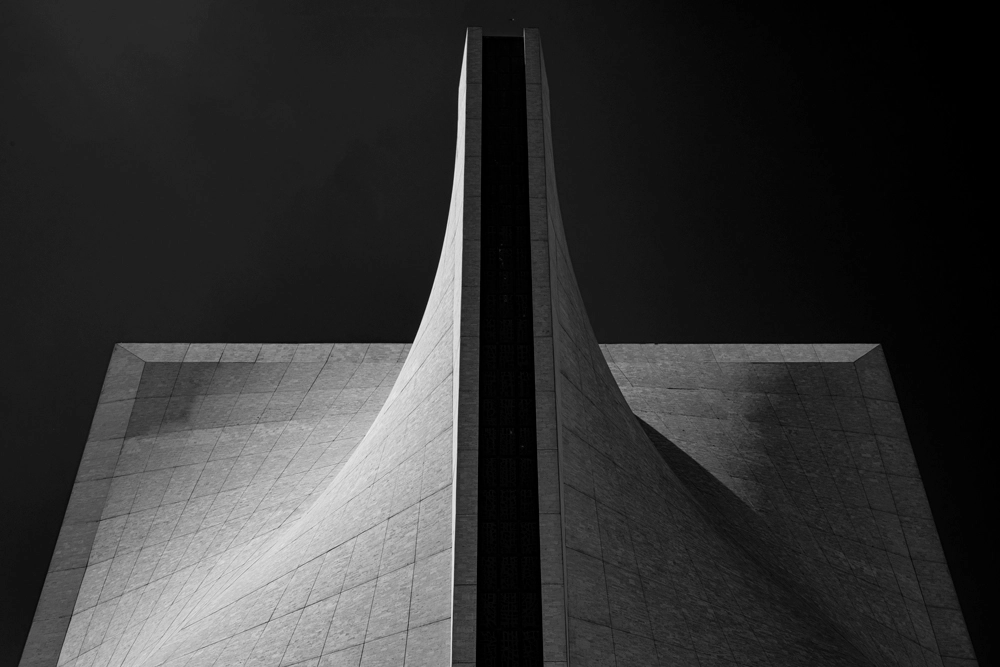
Walk past a post-war concrete housing block and most people keep walking. Walk past a glass and steel Modernist landmark and they stop, admire it, and photograph it. That reaction feels instinctive, almost natural. But it isn't. It has a history, and understanding that history changes how you see every concrete facade that usually gets dismissed without a second glance.
Much of the scorn directed at Brutalist architecture is repeating a bias we have seen before — mistaking political and social failures for aesthetic ones. The buildings are not the problem. What happened to them is.
Concrete was never the point
Listen to the popular narrative and Brutalism was an architectural aberration: an experiment in imposing, inhuman structures that made life miserable for everyone unfortunate enough to inhabit them. That story didn't start with the buildings. It started with what happened to them afterward.
Brutalism emerged from post-war reconstruction in the 1950s and 1960s, driven by an urgent and, at the time, genuinely idealistic program: to provide durable, affordable public buildings for everyone. Housing projects, schools, universities, cultural centres, hospitals — the ambition was to bring considered architecture into every corner of public life. The term itself derives from the French béton brut — raw concrete — a phrase Le Corbusier used not as an insult but as a declaration of architectural integrity. You were meant to see how the building was made. The structure wasn't concealed behind ostentatious cladding or ornament. Transparency was the point.
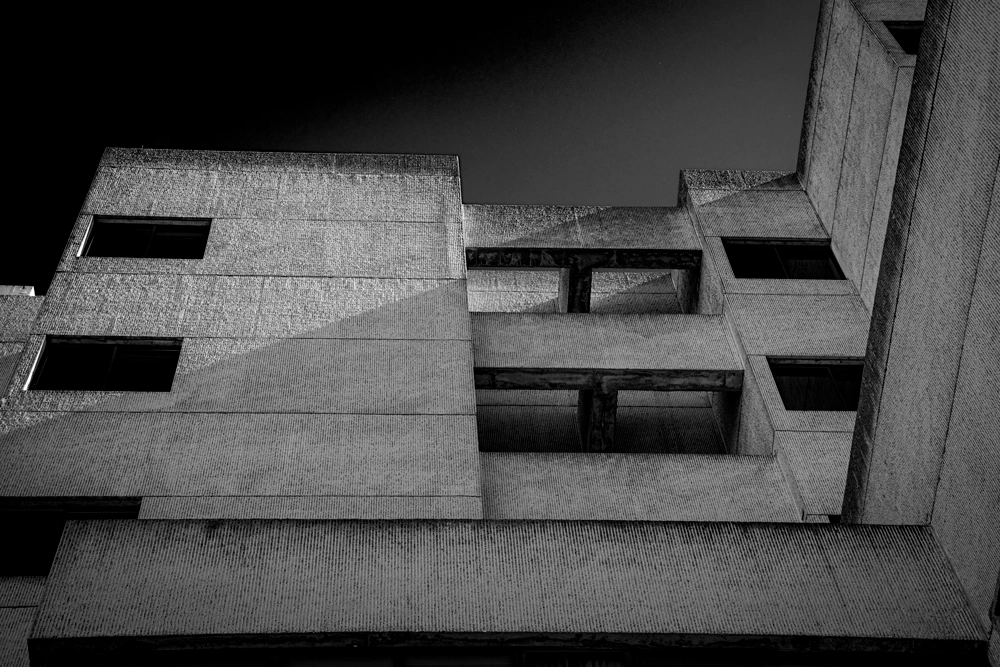
The architects working in this idiom believed in something. That serious, considered design could be democratic. That ambitious public buildings didn't have to be reserved for corporations and cathedrals. That a housing project could be as architecturally rigorous as a gallery, and that doing so was a moral obligation, not an indulgence.
That ambition was not a failure of vision. What followed was a failure of politics.
A visceral response
As the welfare states that built these complexes contracted — cut by austerity programs, divested of public housing responsibilities, rewritten by successive governments — the buildings were left to deteriorate. Maintenance fell away. Investment dried up. The projects that had been designed as expressions of civic ambition became synonymous with deprivation, not because their concrete cracked but because the societies responsible for them had stopped caring.
Media representations did the rest. Brutalist projects became the default backdrop for stories about crime and urban decay. The architecture absorbed the politics. When people looked at a concrete block and felt something cold and institutional, they weren't responding only to the building's formal properties. They were responding to everything that had been allowed to happen to it.
This is not a neutral aesthetic judgment. It is a set of cultural and political choices. The same formal language — exposed concrete, bold geometry, monumental scale — reads entirely differently depending on context, maintenance, and who is inhabiting the space. The Barbican Centre in London and Trellick Tower, following renovation and improved management, are now among the city's most coveted addresses. The concrete didn't change. The conditions around it did.
The aesthetics of lightness
Modernist architecture, in its glass and steel incarnation, doesn't escape this critique simply by looking different. The transparency of curtain-wall glazing, the weightlessness of steel framing, the promise of open luminous interiors — these are also a set of choices that carry cultural freight, and ones that have, for the time being, largely won.
We associate these qualities with innovation, with cosmopolitan aspiration, with being on the progressive side of architectural history. What we interrogate less carefully is who actually gets to inhabit those light-filled spaces, and under what terms. The visual promise of transparency is not the same as the delivery of it.
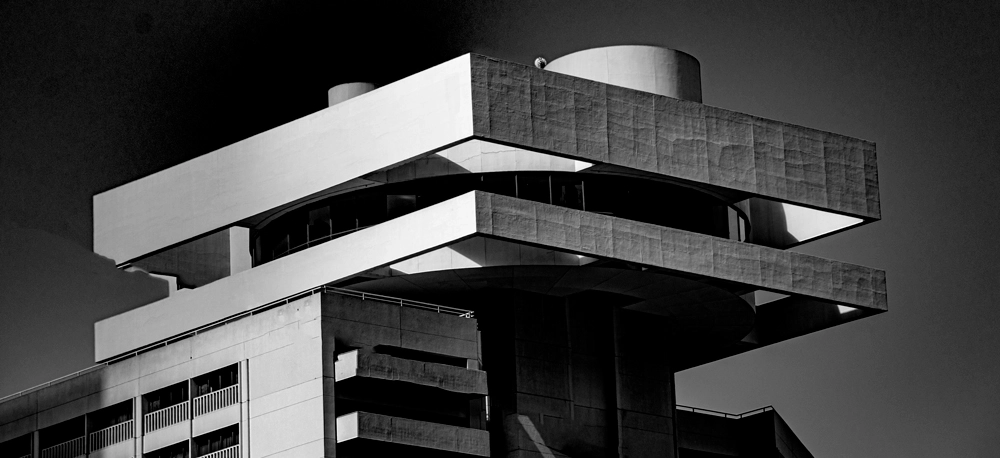
There is a useful parallel buried in the critical language around both styles. When architects and theorists describe Brutalism, they often reach for the word honesty: showing the structure, letting concrete be concrete, refusing to hide the method of construction behind applied finish. When the same critics describe Modernism, they reach for the same word: steel expresses its own structural properties, glass reveals the relationship between inside and outside, material speaks for itself without apology.
Different materials. The same claim. If we accept one kind of architectural honesty and dismiss the other as harsh or institutional, that judgment has more to do with which buildings have accumulated pleasant associations than with any coherent formal principle.
The politics embedded in aesthetic response
The contrast between Brutalism and Modernism is, in large part, a contrast between who the buildings were originally built for.
Post-war Brutalism was overwhelmingly in the service of social housing, public education, and civic infrastructure. Its clients were governments trying to house millions of people quickly and affordably. Its aesthetic is inseparable from that democratic mission. Contemporary Modernism, in its most visible and celebrated forms, serves corporate headquarters, cultural institutions with substantial endowments, and high-end residential developments. Of course it photographs better. It inhabits a better-resourced world.
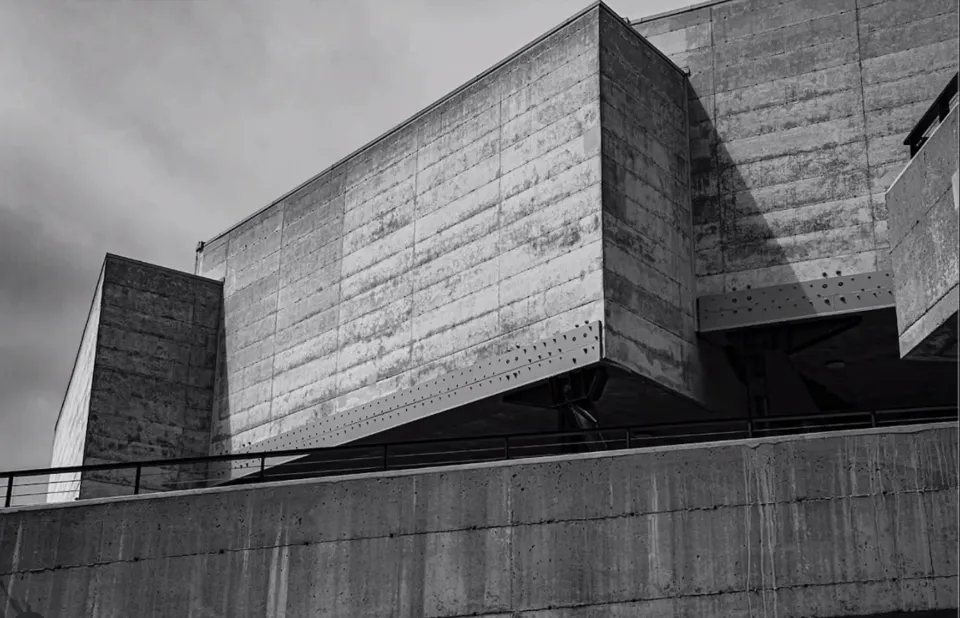
Brutalist projects that were maintained, managed thoughtfully, and embedded in communities with adequate public investment are, by and large, experienced as distinctive, interesting, sometimes beautiful. The buildings synonymous with failure were failed by the political decisions made around them, not by the architects who designed them. Concrete did not cause social exclusion. Defunded public services, concentrated poverty, and stigmatizing media did.
Which raises the question: if a Brutalist housing project and a celebrated Modernist gallery had been built with equivalent care, investment, and ongoing maintenance, would we still feel the same way about them? If the answer is no — and I think it is — then we are not really talking about aesthetics. We are talking about class, and about which publics we have decided are worth designing for.
Shifting the perspective
If the goal is more honest architectural criticism, the perspective needs to shift.
First, stop treating Brutalism's reputation as primarily an aesthetic verdict. The popular case against it conflates the buildings with the political choices made around them, and that conflation has been convenient for those who would prefer to demolish public housing and replace it with private development rather than maintain and improve what exists.
Second, acknowledge that the "honesty" we celebrate in Modernism is not categorically different from the honesty Brutalism was pursuing. Both are answers to the same question: how should architecture relate to its own materials and methods of construction? Preferring glass and steel to exposed concrete is a matter of historical taste, not architectural principle.
Third, ask a simple, uncomfortable question: why is a monumental public building from the 1960s routinely described as an eyesore while a monumental corporate tower from the same period is described as an icon? If the answer is genuinely about formal quality, the arguments need to be made more coherently than critics have managed so far. If the answer is really about which buildings housed which populations, we should name that directly — rather than laundering it as aesthetic preference.
Toward honest criteria
None of this means every Brutalist building deserves preservation. Some were poorly resolved even by the standards of their time. Some have outlived their structural and functional life. Urban contexts change, and so do the needs of the communities within them.
But if critics, planners, and public bodies want their judgments to carry credibility, those judgments need to be grounded in architectural assessment, not in the accumulated residue of decades of political stigma.
We should look at any Brutalist structure with the same criteria we bring to any other style:
- Does it serve its users effectively, and with genuine consideration for their experience?
- Does it contribute to the public realm in ways that go beyond pure function?
- Does it have formal qualities worth preserving, independent of the associations it has gathered?
- Can those associations be changed through investment, maintenance, and sustained community engagement?
If a building fails those questions on its own terms, that is a basis for a real conversation. But dismissing it because it is concrete, because it reads as institutional, because it reminds us of places we have decided to stop funding — that is not criticism. That is a bias masquerading as taste.
Questions that deserve a straight answer
So here is the conversation worth having with anyone who has ever walked past a concrete block without stopping:
- If we celebrate the Barbican and Trellick Tower as serious architectural achievements, what principled reason do we have for treating other Brutalist buildings built with the same formal language as candidates for demolition?
- If we acknowledge that Modernist glass buildings also carry complex legacies — of corporate monoculture, of privatised public space, of environments accessible to some and closed to others — why is concrete the material that becomes synonymous with failure?
- If we value architectural honesty as a principle, can we extend that value to the exposed structure and visible construction of Brutalism as readily as we extend it to the structural transparency of steel and glass?
The answers won't be comfortable, and they shouldn't be. But they should at least be honest about the political history embedded in our aesthetic reflexes, the social forces that shaped these buildings' reputations, and the economic realities that determine which kinds of architecture get celebrated and which get demolished.
The concrete didn't fail. We just stopped looking after what we had built.
Resources
A Guide to the New Ruins of Great Britain
— Owen Hatherley — Verso, 2010
An opinionated tour through post-war British architecture and its afterlives.
Space, Hope and Brutalism: English Architecture 1945–1975
— Elain Harwood — Yale University Press, 2015
The serious historical account; dense but rewarding.
SOS Brutalism Archive
— Deutsches Architekturmuseum (DAM)
A global register of Brutalist buildings and their current condition.
The New Brutalism: Ethic or Aesthetic?
— Reyner Banham — 1966
The foundational critical text; useful for understanding what the architects thought they were doing.