Beyond Permission What Photography Owes Sacred Belief
Permission allows a photograph to be made. It does not decide what the image becomes once ritual, belief, and vulnerability enter public view.
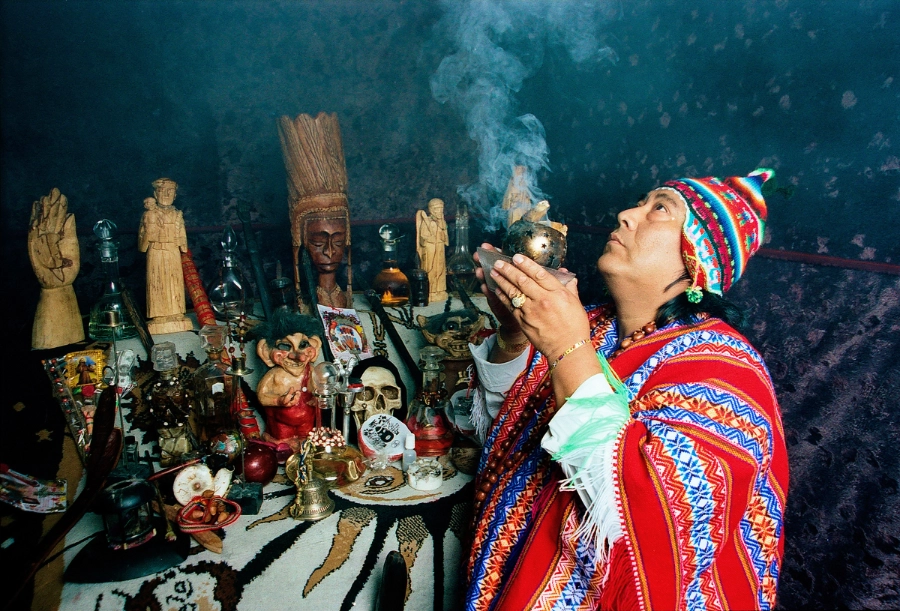
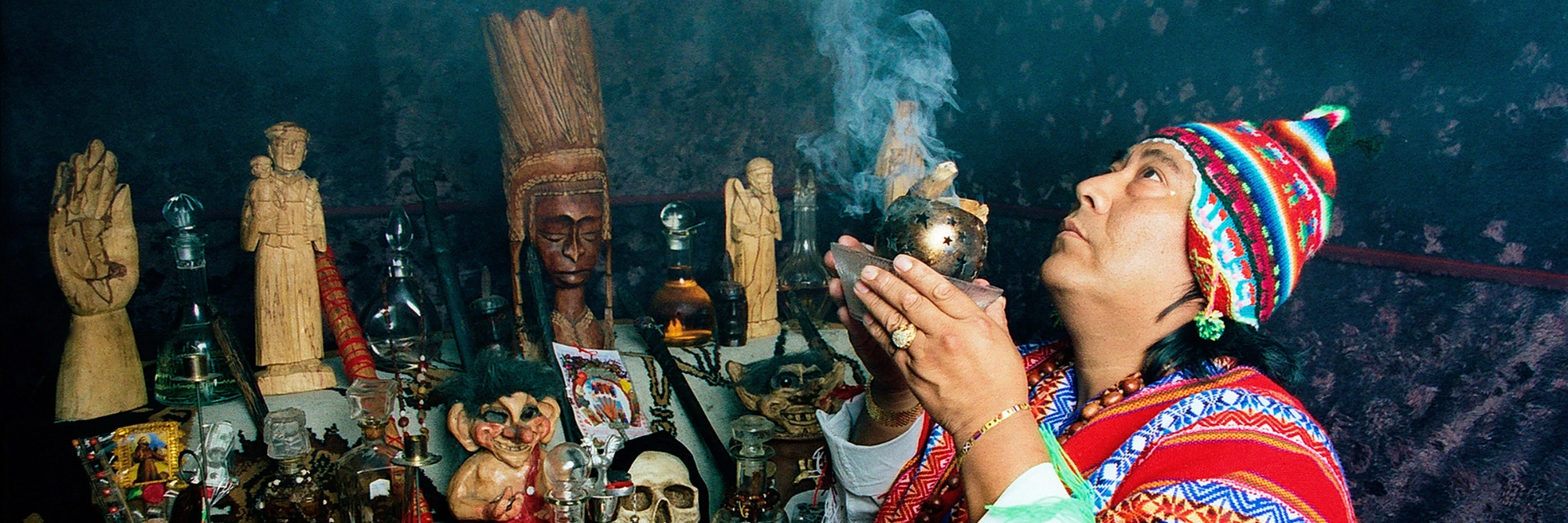
Prayer and SmokeA spiritual healer raises a smoking vessel before an altar within the devotional environment that gives the gesture its meaning.
The Photograph That Refuses to Explain Itself
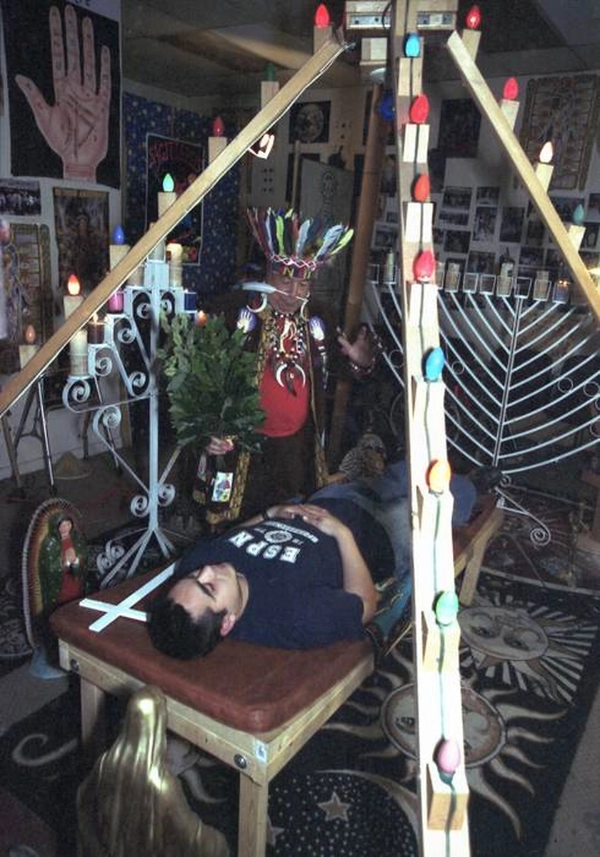
One photograph in my project Magic Healers of Los Angeles shows a man lying on a narrow ritual table. A white cross rests across his chest. Upright staffs and cords divide the frame, while painted symbols, small objects, and the dense interior of the room surround his body. It is one of the most immediately arresting images in the series. It is also the photograph that makes me least comfortable with my own argument.
Inside the room, the arrangement belonged to a healing practice. The man was not posing as an emblem of danger, irrationality, or the occult. The objects around him were not theatrical decoration. Yet a viewer who encounters the photograph apart from that setting can easily read it in precisely those terms. The image concentrates mystery and vulnerability so efficiently that its visual strength may work against the experience it records.
That is the hard case for me. If I remove the photograph, I may protect the participant from a sensational reading, but I also remove evidence of a practice that is rarely represented with seriousness. If I publish it because it is visually powerful, I may use the participant's vulnerability as the source of that power. Neither choice is innocent.
Permission Is Not the End of Consent
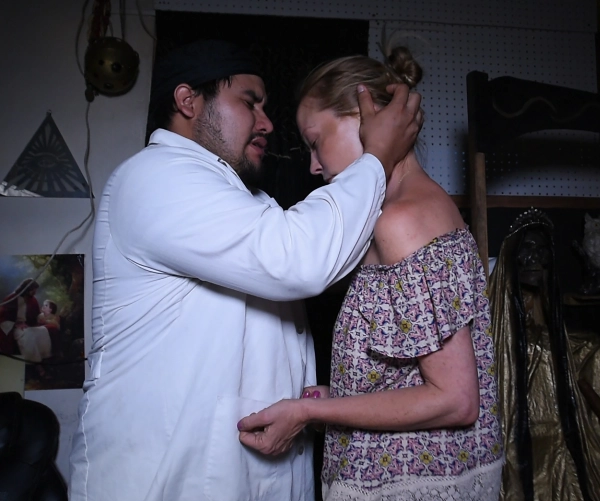
Documentary photography often treats access as an ethical achievement. A photographer enters a private space, explains the project, receives permission, and makes the picture. From a legal or procedural point of view, that may appear sufficient. In a ritual space, it is only the beginning.
Permission answers whether I was allowed to be present with a camera. It does not answer what the photograph will become after it leaves the room. The people who permitted me to work among curanderos, shamans, santeros, and other spiritual practitioners in Los Angeles met me within relationships shaped by language, trust, migration, illness, faith, and the hope of healing. A later audience meets only a rectangle on a page. It may know nothing of those relationships. It may bring assumptions about Latino spirituality, superstition, fraud, exoticism, or danger that were never present in the original encounter.
Consent therefore cannot be reduced to the instant before the shutter is released. It continues through editing, sequencing, captioning, publication, and republication. A person may agree to be photographed without imagining every headline, layout, audience, or commercial context in which the image could appear. The photographer cannot control all later interpretation, but that limit does not cancel responsibility. It makes the decisions under the photographer's control more important.
Accuracy Can Still Mislead
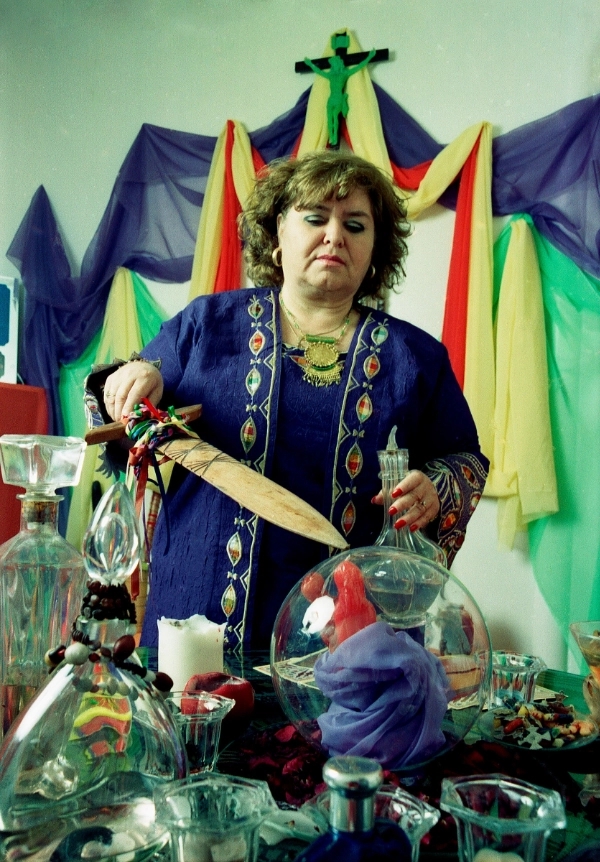
The camera can describe every visible object accurately and still misrepresent what happened. Smoke may register as atmosphere. A cross may become a dramatic sign. A person lying still may appear powerless. The frame does not lie about what was in front of the lens, but it can detach each element from the belief that joined them.
This is where the familiar defense of documentary neutrality fails. The photographer never simply shows what was there. I decide where the frame begins and ends, which fraction of a second survives, which pictures precede and follow it, and which words tell the viewer what kind of event is being seen. An editor and publication add another set of choices. Meaning is produced through this chain, even when nobody intends to distort anything.
The opposing position is understandable: once permission has been granted, the photographer's duty is to observe, not protect the subject from every possible response. Too much caution can become another form of control. It can make sacred practices invisible, deny their contradictions, or present believers only through respectable images that reassure outsiders. A difficult photograph should not be suppressed merely because someone might misunderstand it.
But showing everything is not the same as refusing censorship. Selection is already unavoidable. The ethical question is not whether I intervene, but whether I acknowledge the power of my intervention and accept its consequences.
Where My Own Edit Fell Short
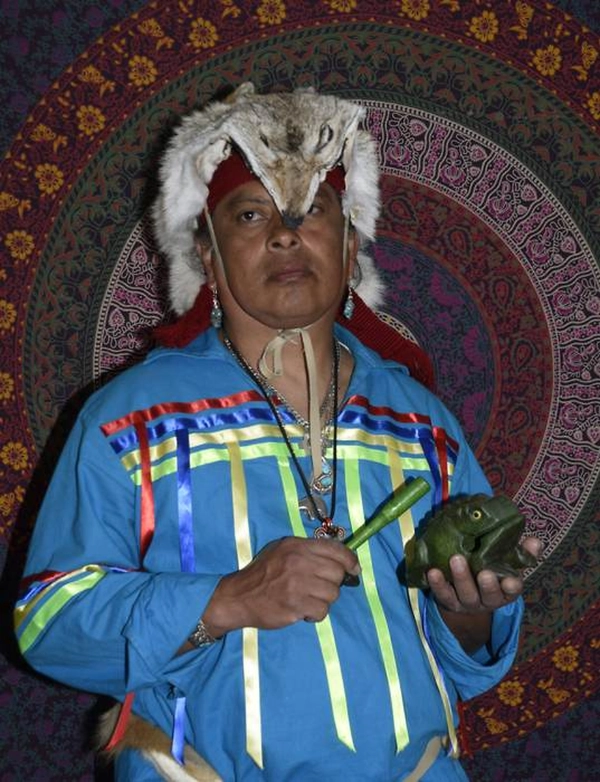
When I first assembled a submission sequence from Magic Healers of Los Angeles, I included the photograph of the man on the ritual table. I placed it among images of altars, objects, healers, and ceremonies so that the series would move from environment to human encounter rather than present a single shocking scene in isolation. That sequencing was an attempt to preserve context. It also made the project less immediately dramatic than an edit built only from its most theatrical moments. I stand behind that choice.
Yet the caption in that submission identified the image only by its number and my copyright. The sequence supplied some visual context, but the words supplied almost none. I had argued that the work should not reduce belief to spectacle, while leaving one of its most vulnerable photographs exposed to precisely that reduction. The omission was not neutral. It allowed the image's strangeness to do the editorial work.
This is the point at which my principle costs something. A fuller caption may interrupt the photograph's ambiguity. It may make the page less elegant or the image less marketable to an editor who wants mystery. It may also admit the limits of what I know rather than turning a ritual into an authoritative explanation. But if the photograph depends on withholding the context that protects its subject from caricature, then its power is too cheap.
The correction is not to explain a belief system from above or to translate every sacred act into language outsiders find comfortable. It is to state what can responsibly be stated: that the scene was part of a healing ritual; that the participant was not performing for the camera; that the objects carried meanings within the practice; and that the photograph records an encounter without claiming to reveal or validate its spiritual truth. A caption should not solve the image. It should prevent avoidable falsehoods from taking possession of it.
The Price of the Stronger Image
Editors and photographers often speak of the strongest image as if strength were self-evident. Usually the phrase means visual immediacy: the picture that stops the eye, survives a small screen, or promises the most attention. In work involving ritual, that definition can reward exactly the elements most likely to be misunderstood. Smoke, blood, trance, unusual clothing, devotional objects, and exposed bodies can become shortcuts to fascination.
Preserving context may therefore mean giving up a more publishable edit. An altar without a person may be less dramatic, but it establishes a world of practice rather than a spectacle of vulnerability. A portrait in which a healer returns the viewer's gaze may resist the fantasy that the photographer has secretly penetrated an unknowable culture. Repetition and quieter transitions may slow the sequence, but they give ritual a duration and social setting beyond one extraordinary instant.
This does not mean quiet photographs are automatically ethical or dramatic photographs automatically exploitative. The photograph of the man on the table remains in my sequence because the vulnerability it contains is part of the reality I was allowed to witness. Removing every unsettling image would create another distortion. My responsibility is to refuse the easy use of that vulnerability: not to isolate the frame as a curiosity, not to title it with the language of fear, and not to let the caption pretend that copyright is context.
An Ongoing Obligation
The most honest conclusion is not that my photographs escaped spectacle. I cannot be certain they did. My intention, my access, and the trust extended to me do not guarantee the result. The image continues to meet viewers whose assumptions I cannot predict, and publication places it within institutions and markets that may value precisely what I tried to resist.
What I can do is keep the ethical question open at every stage. Does this frame preserve a person's dignity while showing the difficulty of the moment? Does the sequence return agency to the healers and participants, or does it turn them into evidence for my own idea? Does the caption clarify without claiming authority I do not possess? Is the publication willing to maintain that context, or does it want only the exotic surface of the work? And if a participant later objects, am I prepared to listen rather than hide behind the permission originally given?
Photography can make spiritual practices visible across cultural boundaries. That visibility can challenge prejudice and show how ancestral beliefs continue inside a modern American city. But visibility is not automatically a gift. It can expose, simplify, and consume. The photographer's duty begins with permission and factual accuracy, but it does not end there.
The decisive question is not simply whether I had the right to make the photograph. It is what I ask the photograph to do after it enters the world, and what that use may take from the people whose belief made the image possible.
About the Author
Rogelio Martell is a Peruvian-American documentary photographer, filmmaker, and writer. He studied photography at the School of Visual Arts in New York and filmmaking in Lima and Los Angeles. His work examines spirituality, migration, Indigenous traditions, music, and cultural identity across Latin America and Latino communities in the United States. His documentary projects include Magic Healers of Los Angeles and Chicha USA. He is based in Nashville and continues to photograph communities whose beliefs and histories are often reduced or overlooked in mainstream media.
Copyright Notice
Text and photographs © 2026 Rogelio Martell. All rights reserved.
Licensed to the illūminātum for publication with this article.