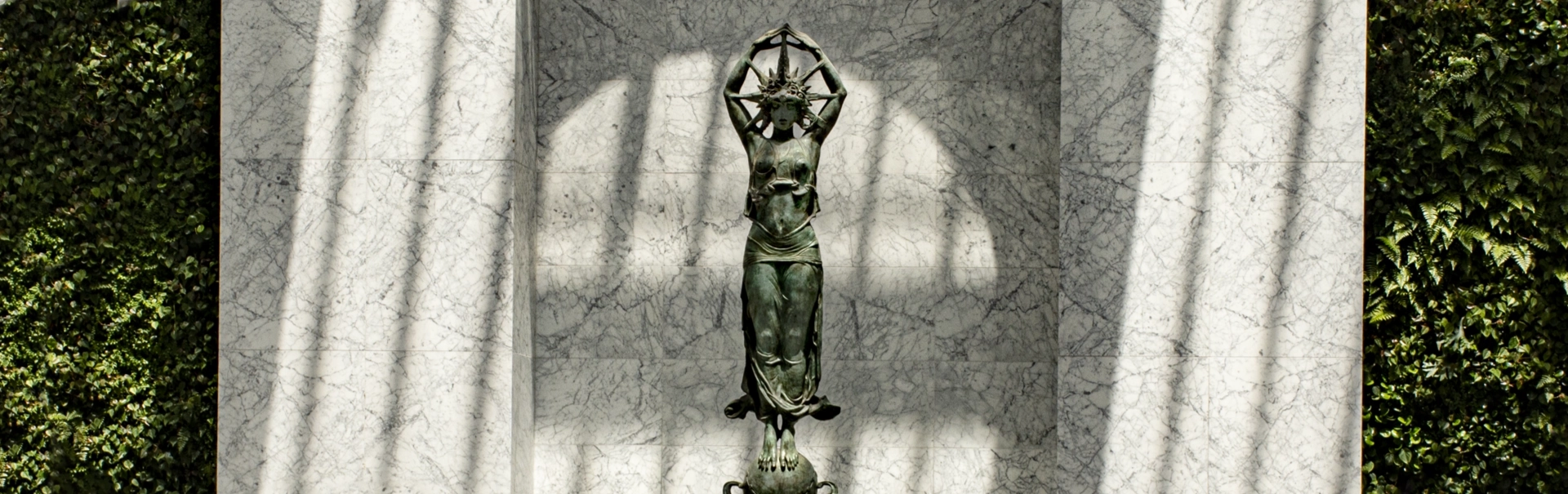
Fifth in the series: The Post-Photographic Shift The Artist's Mind in the Machine Age
The question of whether AI removes the artist from the work sounds new. It is not. And the answer the art world has already given is more definitive than the current debate suggests.
The objection comes up reliably, and it comes up early. You describe an AI-assisted body of photographic work, the research behind it, the decisions that shaped it, the months of iteration that produced it, and somewhere in the conversation, someone asks: but who made it?
The question is meant to be difficult. It is offered as evidence that AI-assisted work exists in a category where authorship cannot be identified, and that work without traceable authorship cannot be taken seriously as art. The implication is that something fundamental has been removed from the creative process, that the artist is present in name only, and that the machine has done the actual work.
This is a reasonable concern stated as an unreasonable conclusion. The concern is worth taking seriously. The conclusion does not survive examination, and the examination here is not of the art world's broader record, but of what an AI-assisted photographic work actually looks like when you examine it closely.
What authorship has always meant
The assumption behind the objection is that authorship requires making: the artist's hand must be present in the production of the work for the artist to be its author. That assumption has been tested repeatedly across the history of modern art, and it has not held.
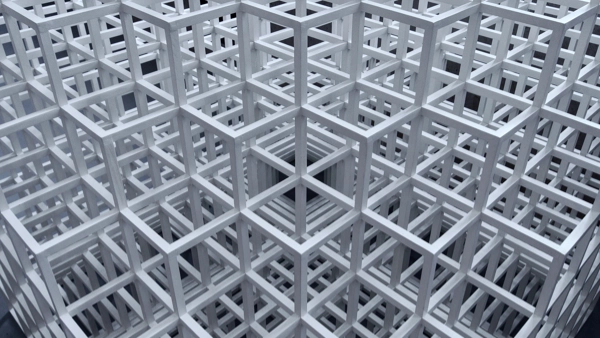
Sol LeWitt | Photograph: Rob Oo from NL
CC BY 2.0, via Wikimedia Commons
As this series has traced, Damien Hirst did not paint most of his spot paintings. Andy Warhol ran a factory. Sol LeWitt issued written instructions for works executed entirely by others. In each case, the art world identified authorship not in the hand that executed the work but in the intelligence that conceived it, the decisions about system, sequence, constraint, and selection that determined what the work became.
That location of authorship is not a special accommodation made for provocateurs. It is how authorship actually works across the full range of serious creative practice. A film director does not operate the camera, mix the sound, or edit the footage, yet no one argues that the director is not the author of the film. An architect does not lay the bricks, yet the building is unambiguously the architect's work. A composer does not play every instrument, yet the symphony belongs to the composer.
In each of these cases, authorship resides in the decisions that shape the outcome: what it is, what it means, what it asks of the person experiencing it. The distance between the author's hand and the finished work is not evidence against authorship. It is simply how creative practice at a certain scale operates.
Where the artist is in AI-assisted work
The question of where the artist is in an AI-assisted photographic work is answerable. It requires looking at the work rather than assuming the answer in advance.
Before an image exists, the artist has made decisions about what they are trying to do, what visual territory they want to explore, what emotional or conceptual register the work should occupy, what relationship to photographic history they are working within or against. These are not small decisions made casually at a keyboard. They are the same foundational decisions any serious artist makes before they begin.
The choice of model, the construction and refinement of prompts, the selection process applied to outputs, the decisions about what to keep and what to discard, the sequencing of images into a coherent body of work. Each of these stages is an exercise of artistic judgment. Each produces a different outcome depending on the intelligence and sensibility of the person making the decisions. The tool does not make these choices. The artist does.
What AI changes is not the presence of the artist in the work. It changes where in the process the artist's decisions are concentrated. Instead of decisions made in the field or in the darkroom, they are made in the design of the process, before the image exists, and again in the selection and shaping of what the process produces. The hand moves differently. The authorship does not move at all.
The selection argument
Of all the stages in an AI-assisted body of work, selection is the one most consistently underestimated by people outside the process.
A photographer working with AI tools may evaluate hundreds or thousands of outputs in the course of developing a body of work. The selection from that field is an act of critical judgment that is entirely the artist's: what meets the standard, what belongs in the series, what is discarded regardless of how technically impressive it is. The machine generates possibilities. The artist decides which possibilities become work.
A closer parallel is the documentary filmmaker working with found or archival footage, material the filmmaker did not shoot, did not compose, and did not control. What they do is select, sequence, and shape, and that selection and sequencing is understood, without serious dispute, as authorship. The essay film tradition, from Chris Marker to Werner Herzog, rests entirely on this premise: that working with existing material does not dissolve the author. It relocates them into the decisions about what to use and how.
The scale is different with AI tools, and the source of the material is different. But the nature of the act, the exercise of visual and conceptual judgment in determining what meets the standard of the work, is the same. Selection from a field of generated possibilities is a creative act when the judgment behind it is genuine. The origin of the material does not determine that.
What the objection is actually protecting
When the authorship objection is pressed past the point where the evidence supports it, when it continues to be raised even after the decisions behind an AI-assisted body of work have been explained in detail, it is no longer functioning as an aesthetic argument. It is functioning as a boundary defense.
Copyright law is drawing lines through territory most fine art photographers haven't mapped yet. 3
The boundary being defended is familiar from the history this series has traced. It is the boundary around a set of practices, skills, and tools that have accumulated market value, critical value, and institutional value, over time. When a new tool appears that can produce comparable visual results through a different process, the existing investment in the old process is threatened. The authorship objection is one way that threat gets expressed in language that sounds principled. That does not mean everyone who raises the objection is being cynical. Most are not. The concern about what happens to human creativity when machines can generate images is genuine and worth taking seriously as a cultural question. But it is a different question from whether a specific body of AI-assisted work has a human author whose vision and judgment are present in it.
One question is philosophical and open. The other is practical and answerable. The current debate tends to treat them as the same question, which allows the philosophical concern to function as a substitute for looking at the work. The legal question of copyright in AI-generated work is a separate track entirely, addressed in Made With or Made By published earlier. 3
The artist is still here
The artist working with AI tools is making decisions at every stage of their work. They are bringing to those decisions a developed visual sensibility, a relationship to the history of the medium, a set of intentions about what the work should do and why. The resulting images carry that intelligence in the same way that any body of work carries the intelligence of the artist behind it, not as a signature on the surface but as a governing presence in the choices that determined what the work became.
That is what authorship is. It has always been what authorship is. The machine age did not change it. It made it more visible by separating conception from execution clearly enough that the distinction can no longer be ignored. Which is, in the end, useful. Because the conflation of making with authorship was always an oversimplification, one that flattered certain kinds of practice and dismissed others on grounds that had more to do with familiarity than with genuine critical principle.
The artist is in the work. The question worth asking is whether the work is worth looking at.
The Artist's Mind in the Machine Age is fifth in The Post-Photographic Shift series, a reasoned case for vision over method in photographic art.
Acknowledgements
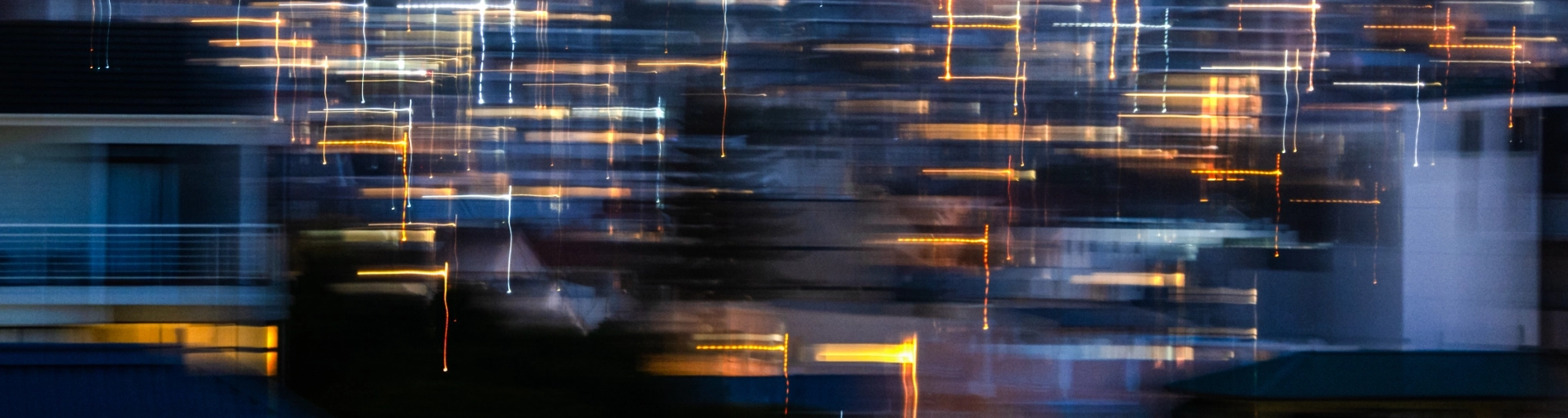
1 Top Banner: Cropped Rooftops at Dawn No. 14031 (2025) by Anonymous
Artist Note: Pinhole photograph with AI-generated additions. The artist is identified anonymously at the photographer's request. Concern was expressed that disclosure involvement with AI-assisted imagery could unfairly affect the reception of other work, which does not use AI. Used with permission.
2 Cube Structure Based on Nine Modules (2012) by Sol LeWitt | Photograph: Rob Oo from NL | CC BY 2.0, via Wikimedia Commons
3 Made With or Made By is a photographer’s layperson perspective. The author and editors work primarily in fine art photography in the U.S. and this perspective is shaped by that context. This article is for informational purposes only and does not constitute legal advice. For advice on your situation, consult a qualified attorney.